Understanding Home Insulation Before You Upgrade
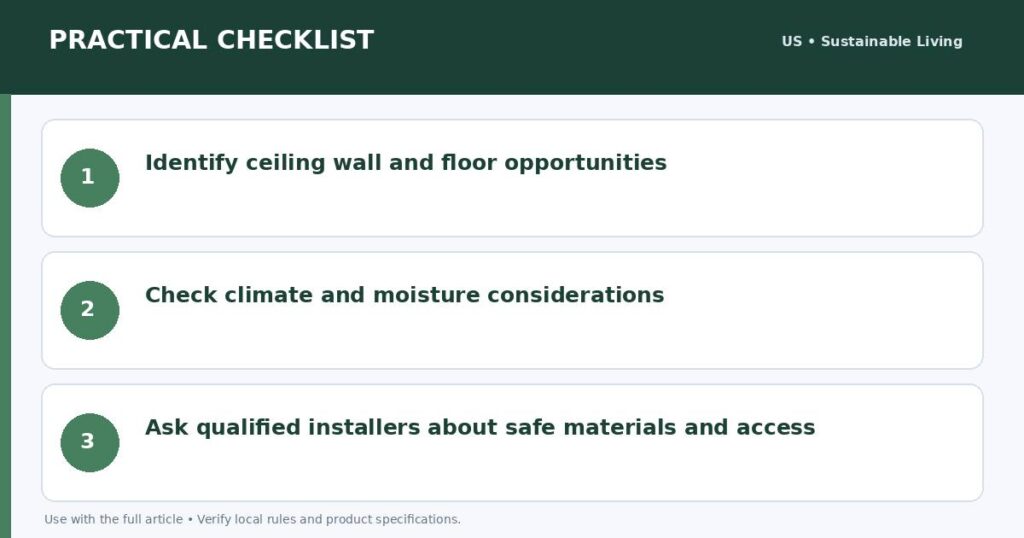
For a cost-conscious household in the United States, home Insulation Before You Upgrade calls for a few practical checks rather than guesswork. Three details deserve attention: identify ceiling wall and floor opportunities; check climate and moisture considerations; and ask qualified installers about safe materials and access. Not every useful guide needs a complicated system. For a cost-conscious household in the United States, the starting point is to identify the decision that matters, the evidence available and the next realistic action. Before taking action, set a realistic scope. If a decision affects safety, health or a significant expense, seek appropriate professional guidance instead of relying on a single online tip.
Start With a Clear Baseline
For a homeowner or renter, begin by identifying the actual constraint rather than collecting more options. Your starting notes should include the current condition, what has already been tried and the next sensible measurement. Lower waste works best when a change also fits daily routines and budgets. Compare the lifetime cost as well as the purchase price. Maintenance, consumables and expected replacement frequency affect whether a change saves money or resources.
Identify ceiling wall and floor opportunities
Start with the specific detail behind this step rather than relying on a general impression. Measure consumption or waste before buying a solution. Bills, meter readings and simple bin checks show where effort is likely to produce a meaningful result.
Durability is part of environmental impact. Maintaining a working item can sometimes be more sensible than replacing it with a new product promoted as greener. Keep the evidence relevant to home Insulation Before You Upgrade and review it before changing course.
Check climate and moisture considerations
Check the relevant limits before committing resources, particularly when the first option looks attractive. Check the disposal rules in your municipality. A material accepted in one recycling system may contaminate another collection stream.
Compare the lifetime cost as well as the purchase price. Maintenance, consumables and expected replacement frequency affect whether a change saves money or resources. Keep the evidence relevant to home Insulation Before You Upgrade and review it before changing course.
Ask qualified installers about safe materials and access
This checkpoint matters because the result must remain useful beyond the first attempt. Compare the lifetime cost as well as the purchase price. Maintenance, consumables and expected replacement frequency affect whether a change saves money or resources.
Durability is part of environmental impact. Maintaining a working item can sometimes be more sensible than replacing it with a new product promoted as greener. Keep the evidence relevant to home Insulation Before You Upgrade and review it before changing course.
A Quick Checklist to Use Today
- Write down the goal and any non-negotiable limits for home Insulation Before You Upgrade.
- Identify ceiling wall and floor opportunities.
- Check climate and moisture considerations.
- Ask qualified installers about safe materials and access.
- Make a note of the result, what remains uncertain and the next sensible step.
Common Mistakes to Avoid
The most common shortcut is to treat the first acceptable option as the best one. A quick comparison of fit, total cost and maintenance can reveal practical differences. People sometimes judge progress by appearance alone. Choose a measure that reflects the real outcome: fewer problems, easier use, lower waste, better understanding or improved reliability. Check local council rules, equipment guidance, and contractor qualifications.
Notes for US Readers
For United States readers, check the requirements of your state or city when the task touches licensing, safety, food handling, travel or regulated services. Use US-specific manufacturer specifications and official local guidance rather than assuming every national recommendation applies everywhere.
Frequently Asked Questions
What should I do first?
Start with the lowest-risk observation: identify ceiling wall and floor opportunities. Do not commit significant money or attempt work requiring training until you have checked the relevant details.
How do I know whether the plan is working?
Compare what actually happened with the outcome you wrote down. For home Insulation Before You Upgrade, look for a clear, repeatable improvement rather than a one-off result. If the issue involves safety or health, a qualified professional should make the assessment.
The Bottom Line
Start with the easiest useful check and complete it before expanding the plan. Revisit the outcome after a monthly comparison; keep what helped and change what did not. Lower waste works best when a change also fits daily routines and budgets.