How to Make Grocery Shopping Less Wasteful
For a cost-conscious household in Australia, make Grocery Shopping Less Wasteful calls for a few practical checks rather than guesswork. Three details deserve attention: plan meals around food already in the kitchen; choose packaging appropriate to product shelf life; and store produce correctly to prevent spoilage. The challenge with make Grocery Shopping Less Wasteful is rarely a shortage of advice. It is knowing which details apply to your circumstances, what to check first and when a confident decision would be premature. Treat advice as a starting point rather than a guarantee. Two people can try the same technique and see different results because their starting conditions are different. Keep records that help you notice those differences.
Start With a Clear Baseline
For a homeowner or renter, begin by identifying the actual constraint rather than collecting more options. Your starting notes should include the current condition, what has already been tried and the next sensible measurement. Lower waste works best when a change also fits daily routines and budgets. Build routines that everyone at home can follow. Clearly placed bins, simple labels and convenient storage prevent a good plan from becoming extra daily work.
Plan meals around food already in the kitchen
Start with the specific detail behind this step rather than relying on a general impression. Durability is part of environmental impact. Maintaining a working item can sometimes be more sensible than replacing it with a new product promoted as greener.
Consider local climate and building ventilation when reducing energy use. Sealing every opening without understanding air flow can create moisture problems. Keep the evidence relevant to make Grocery Shopping Less Wasteful and review it before changing course.
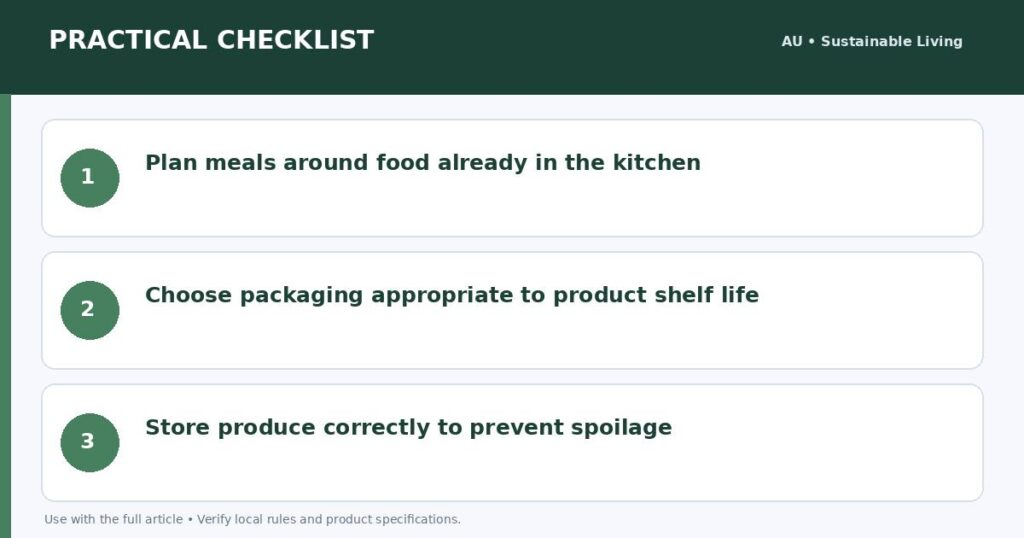
Choose packaging appropriate to product shelf life
Check the relevant limits before committing resources, particularly when the first option looks attractive. Consider local climate and building ventilation when reducing energy use. Sealing every opening without understanding air flow can create moisture problems.
Measure consumption or waste before buying a solution. Bills, meter readings and simple bin checks show where effort is likely to produce a meaningful result. Keep the evidence relevant to make Grocery Shopping Less Wasteful and review it before changing course.
Store produce correctly to prevent spoilage
This checkpoint matters because the result must remain useful beyond the first attempt. Build routines that everyone at home can follow. Clearly placed bins, simple labels and convenient storage prevent a good plan from becoming extra daily work.
Consider local climate and building ventilation when reducing energy use. Sealing every opening without understanding air flow can create moisture problems. Keep the evidence relevant to make Grocery Shopping Less Wasteful and review it before changing course.
A Quick Checklist to Use Today
- Write down the goal and any non-negotiable limits for make Grocery Shopping Less Wasteful.
- Plan meals around food already in the kitchen.
- Choose packaging appropriate to product shelf life.
- Store produce correctly to prevent spoilage.
- Make a note of the result, what remains uncertain and the next sensible step.
Common Mistakes to Avoid
Another mistake is starting with a purchase. Check whether the problem can be reduced by a small change to your setup, routine or existing equipment. It is tempting to copy someone else’s timetable. Adjust the frequency and sequence to your own conditions instead of maintaining a routine that adds unnecessary work. Check local council rules, equipment guidance, and contractor qualifications.
Notes for Australian Readers
For Australian readers, check the requirements of your state or territory when the task touches licensing, safety, food handling, travel or regulated services. Seasonal conditions can vary sharply between regions, so use local guidance and manufacturer specifications rather than a one-size-fits-all checklist.
Frequently Asked Questions
What should I do first?
Start with the lowest-risk observation: plan meals around food already in the kitchen. Do not commit significant money or attempt work requiring training until you have checked the relevant details.
How do I know whether the plan is working?
Compare what actually happened with the outcome you wrote down. For make Grocery Shopping Less Wasteful, look for a clear, repeatable improvement rather than a one-off result. If the issue involves safety or health, a qualified professional should make the assessment.
The Bottom Line
The strongest next step is rarely the most dramatic one. Choose a small action you can evaluate, then use what you learn to decide whether further work is worth it. Lower waste works best when a change also fits daily routines and budgets.